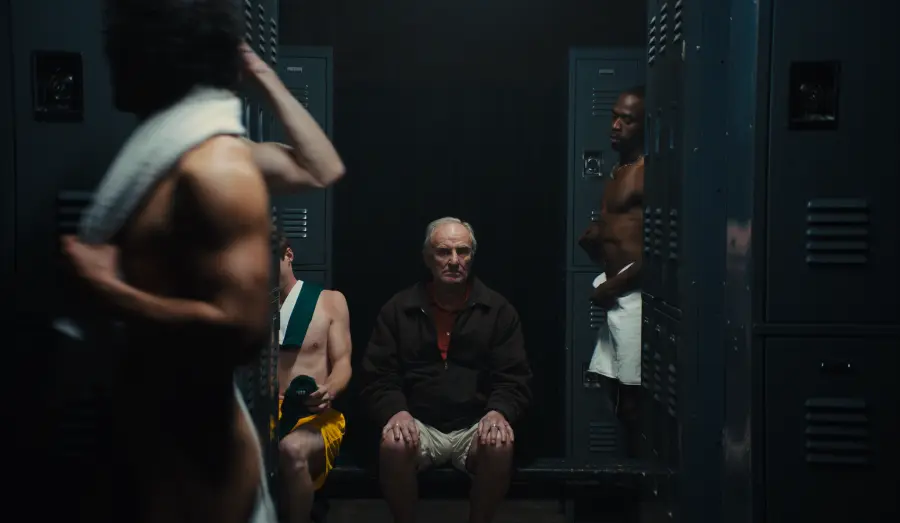
Curious about a man who was always sitting on the balcony of the Holloway Motel, filmmakers Nicholas Freeman and Ramiel Petros decided to call up to him and ask a little about his story. What followed would uncover an incredible untold story. The Last Guest of the Holloway Motel centres around former Norwich City FC star Tony Powell, who vanished from professional football and from the UK in the 1970s. Decades later, filmmakers Nicholas Freeman and Ramiel Petros discovered him managing a motel in West Hollywood, revealing a life lived largely in secret.
After watching the documentary in Norwich, surrounded by people who remembered Powell from his football days, I spoke to co-director Ramiel Petros about the making of the film, discovering Powell’s story and his relationship with its central figure.
—-
TF: Thank you for speaking with me. It was really lovely to watch the film the other day, especially here in Norwich. You’ve been travelling around the UK with the film – how does it feel to bring it back here and see British audiences, particularly in Norwich, responding to it?
Ramiel: It’s definitely been different playing in the UK. I think the film means a little bit more to people in the UK than it did when we were in the US. Like our post-film Q&As often feel a lot more like conversations than little questions. You know, in America, it was so often questions such as: What lens did you use? How did you film this? What was it like to be there? And here, people have a lot that they want to talk about from their perspective, as opposed to just asking questions. A lot of people want to contextualise what football means and relate their own experiences, such as having a strange family and things like that.
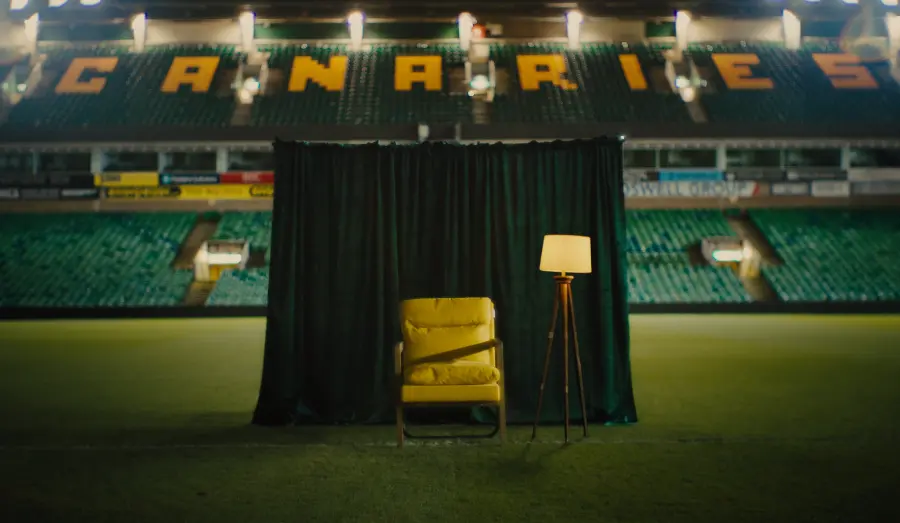
So we’ve really loved these screenings; it’s felt so special to be here. We played at the BFI [Flare], and Norwich obviously was really special as you’re playing it to people who have watched Tony play when he was 25-30, so they have a frame of reference for it that no other viewer has. If you watched him on the pitch, you know what type of player he was, and it makes you feel connected to it in a different way. So that’s been lovely.
TF: The film debuted in the UK at Flare, which celebrates LGBTQ+ films. How important was that for you, and how did you go about tackling that topic in the film?
Ramiel: Hugely – this film is for everyone, but in particular, it’s important to us that the queer community is responding to this film, also because Tony’s story is a queer story. The BFI Flare was like an amazing kind of homecoming for it, just because the reach of that is so expansive, particularly in the queer community, and also getting to come to London, his family got to come to that screening, and Denise, his sister, got to do the Q&A with us, and I think that was our largest screening in the UK – there were 400 people, and they got to go up to Denise and tell her what it meant to them, and it was the first time she got to experience how people respond to it in real time.
I think there was a fear in some people, as the things that have come out in the tabloids about gay soccer players are really destructive and scary. So there’s a bit of holding your breath, wondering if this film is going to create that again. But in the film, you have an hour and a half to tell someone’s story, as opposed to a headline, so there’s far more context by watching it, and it’s difficult to walk away with short-sighted thinking on it. Obviously it’s a really complicated story. With Tony Powell, there are things to admire about him, but there are things to admonish him about. So it’s special we get to allow Tony, in his own voice, to tell his story to the UK.
TF: I think that was portrayed very tastefully. Tony isn’t a perfect person, and you’ve presented that very well, especially the fact that he has his own perspective and his family may have another, but it must’ve been hard to get that across when you’ve built a close relationship with him?
Ramiel: For a lot of reasons, also, the timing of 95 minutes doesn’t allow for you to examine every single point of view the way that it may need to be. For us, it was just important that you have an understanding of everyone’s story. Whether that means you know every detail of everyone’s story, I think that isn’t possible in a film, but for us we really wanted to show Tony, thorns and all, and not just focus on one aspect.
As we talked about earlier, we knew we were telling this incredible queer story, and I think that there were maybe some schools of thought that by showing the dark sides of his life, we were kind of taking away from the power of him coming out as an athlete, but I actually feel like the disservice is when you don’t show someone as they are, and then, in terms that we’d be setting Tony up for failure if we weren’t presenting him as he is in the world.
TF: There’s a moment in the film, without spoiling, where people are hoping that the documentary doesn’t glorify him, and I don’t think it does at all; if anything, it’s a well-rounded portrayal.
Ramiel: The film tries to look at everyone without judgment. We’re not deciding what is good or bad; we’re presenting the information we had at the time.
TF: The documentary is a really brilliant example of divine timing; the time you found Tony was so crucial to his own life. How did you come across him and decide to make this documentary?
Ramiel: For sure, I think serendipity was touched in this project at so many different points. The beginning, with the fact that I moved to West Hollywood a few months before the motel was sold, and Tony moved out, and so I met Tony as a motel manager running this abandoned motel just by shouting up to him from the street and asking who he was and what was going on. He said, “I’m the manager of this motel. I’m getting evicted. It’s becoming a homeless shelter, and that’s that”. And I thought that’s an interesting, compelling five-minute documentary. Let’s make a short film, and so it started as that, and then he eventually told us, and we learned that he was the famed Norwich City football defender who played 275 games with AFC Bournemouth, 250 games with Norwich, was Player of the Year, and part of their Hall of Fame. You know, this huge, storied career, and the next question you have is: how did you end up running this motel all alone? And so that’s how the story began.
TF: When you make a documentary about real people and real events, you never know where it could take you. Was there a moment where you realised this was going to be a lot bigger and more unexpected than you originally anticipated?
Ramiel: It’s like a snowball that was rolling down a hill and picking up more, becoming something bigger and bigger. For us, here’s what I will say: for so long, what we were documenting felt so heavy, and there was so much pain in Tony’s story that we were documenting. We were finding out he had partners that he lost; he was going through health crises as we were filming. A lot was happening. He was being evicted, and the thing that was so joyful was that things started to become more hopeful as the film was being made. You know, the opportunities came to reconnect with family and to change the life he had been living for the past 25 years, and so I think that was the part that really made it feel like we were documenting something that was like once in a lifetime. Once these moments of change started to happen in Tony and in his life, we became so hopeful and happy as filmmakers and in the film itself.
TF: The story lends itself so well to a documentary, as there are so many twists and unexpected elements that are later revealed. Some really low lows for him must’ve been hard for you both as well. How did you go about navigating the documentary, and how long did the whole journey take?
Ramiel: Yeah, we were filming for about 18 months, and we tried our best to have the film unfold in chronological order, the way it happened. We really wanted the audience to experience meeting Tony and learning about him in a similar way that we did. So meeting him as a motel manager and finding out he’s a footballer, and you know, just as the film progresses, finding out information in a similar way that we had, just because when you’re kind of dealing with complicated stories, the order that you give the information, I think, drastically affects how you feel about every doc subject. And so we were really just trying to be authentic to the way we had discovered it in real life and the way that it had unfolded over those 18 months.
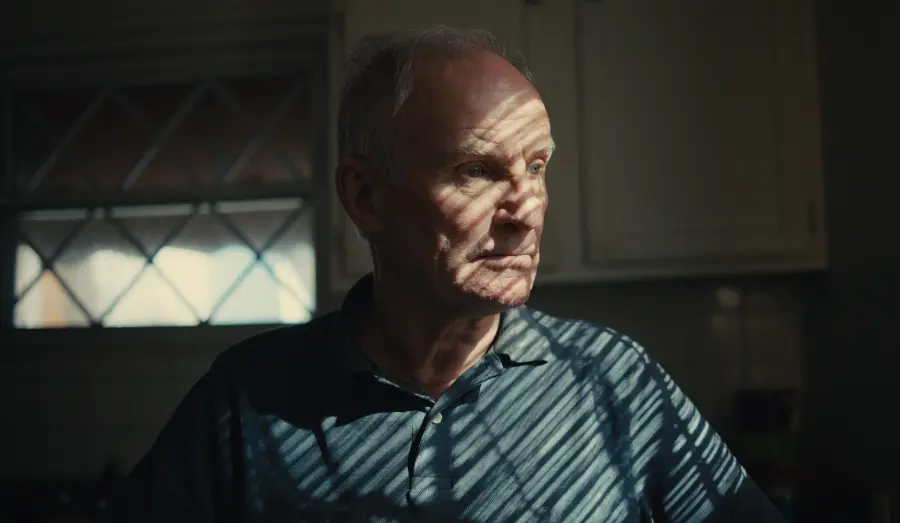
TF: Tony appears in the documentary as quite secretive and nonchalant. How long did it take for him to open up? Did you have to build a relationship first, or was it instantaneous?
Ramiel: It kind of depended on what you were talking about. Some stuff was not revealed to us until, you know, very late in the process. There was some stuff he was an open book about, and there was some stuff that weren’t secrets necessarily, but no one had asked him about it in 30 years, and so just being curious and conversational, really, I think, a lot of that just came out of him. I think he had been waiting for, you know, someone to care about his life in that way.
Obviously, a huge part of documentary filmmaking is your relationship with the subjects on screen, and a lot of that relies on how you behave off camera. You do have to treat people with respect. You have to be honest. I think so often in real life, you kind of tell when someone isn’t being truthful or when they’re kind of going for a different angle. And so we found, as long as we were open, honest, and communicative with the subjects, that we would have really good relationships with them. And we felt like we cared about everyone. I think that was a big part of it too. We weren’t treating anyone just like characters in a story. We really wanted to make sure that they felt like they were a part of the documentary.
Read More Deep Dives
TF: And did you find some elements out from research, rather than directly from him?
Ramiel: Yeah, some of the stuff we found out from research, some of it we found out from filming with other people who knew Tony, but there is nothing that we found out about that we didn’t then ask him to speak about. It doesn’t feel real until you’ve addressed it with the main subject; is how we felt about it.
TF: Tony is better known in the UK than in America, and the documentary shows some of the tabloid headlines about him at the time that weren’t the kindest. How did it feel to tell someone’s story when there were so many preconceived notions and rumours going round?
Ramiel: We had the benefit of knowing Tony before we knew about that part of his life, right? So, had we learned about his story through the tabloids first, and then found him. We would have kind of come in with a very different energy. I think based on the fact that we had spent months with him, we felt like we knew his character really well. That by the time we were finding out about these other salacious things, it wasn’t changing our opinions about him. It really kind of became a question of how this came about. And so the curiosity maybe leaned more towards why did that end up as the story, as opposed to, you know, is that Tony Powell?
TF: There’s a really special moment in the documentary that is pivotal to both the story and his life. How did it feel to be a part of making that happen?
Ramiel: Yeah, it’s kind of surreal. There were moments where we were filming, and we thought, how did we end up here? I really kind of give so much credit to his family, just because I think that everyone was navigating such random circumstances, as you know, you haven’t heard of from someone in 45 years, and a film reaches out to you. So I think that it was, yeah, it was just really special. I think a once in a once-in-a-lifetime kind of opportunity for us as filmmakers.
TF: Tony is such a character in the documentary, quite lovable and very funny. Has he seen the documentary, and what did he think of it?
Ramiel: Yeah, he has. He had two main comments for us the first time he watched it, which was one, he was incredibly emotional, and when it ended, he said, “When we set out to make this, you said that you wanted to tell my story and tell it truthfully, and I think you’ve done that. I think you were really fair.” And the second thing he said was that it was so much more professional than he thought it was going to be, which is Tony Powell for ‘good job.’
TF: You’ve got to have that little knockdown when you’re complimenting something!
Ramiel: Very British.
TF: Did making this documentary change your perspective on anything, or did you learn anything whilst making it, and what do you hope audiences take from it?
Ramiel: We hadn’t made a documentary before, and that experience was really special because when you’re working with real life, the weight feels different when you go home and the pressure of telling the story.
For us, I think something I’ve learned throughout this process is that fear can hold you back in so many ways, and that your job as an individual in this life is to like work through your fear so that it’s not impacting others, and what I mean by that is Tony was afraid to be his true self around the people that love him, and he never gave them the opportunity to love him fully. And the stories we tell ourselves can sometimes hold us back in that regard. So, if you can work through your fear, your job is to give everyone the opportunity to love you fully. And how they respond to that is their choice, but I think what such a huge part of this film was is working through your fear and letting the people around you rise past your worst expectations. So yeah, I think that’s like a big part of what we hope people take away is that it’s never too late to make amends, change your life, to correct the mistakes you’ve made.
And secondly, kind of at a more global scale, if you are a football supporter, if you are a football player, it is still incredibly difficult for athletes to be out. I would love for a football fan to watch this and understand that the pressure for an athlete to come out is almost impossible. I think there are some things that should just be off limits, like when you’re taunting an opponent or things like that. There are just some things that, whether you agree with it or not, you should learn to accept.
TF: Also, the documentary came from your curiosity about a man on a balcony and your courage to shout up to him. I wouldn’t have had the courage to do that, but it’s formed such a beautiful story and shed light on a situation that may never have been shared, so I think there’s a lesson that can be taken from that too.
Ramiel: For sure. Talk to your neighbours, and really, people need community. So show up for your community.
TF: The last question is: what do you think Tony would want people to understand about him after watching this documentary?
Ramiel: I’ve never been asked that before. I will say Tony, for so long, was asking, why are you guys making a movie about me? What are people going to care about? And I think when people told him that hearing him tell his story and him being honest has helped them work through their own fears that they had, that’s what’s meaningful to him.
A huge thing about Tony is that we should let everyone just live their life the way they want. He’s so judgment-free, and if he could wave a magic wand in this world. It would be for everyone to mind their business and to let everyone live how they want.
Follow @thelastguestdoc or sign up for their mailing list for updates on how to watch The Last Guest of the Holloway Motel in the UK after its theatrical run.
