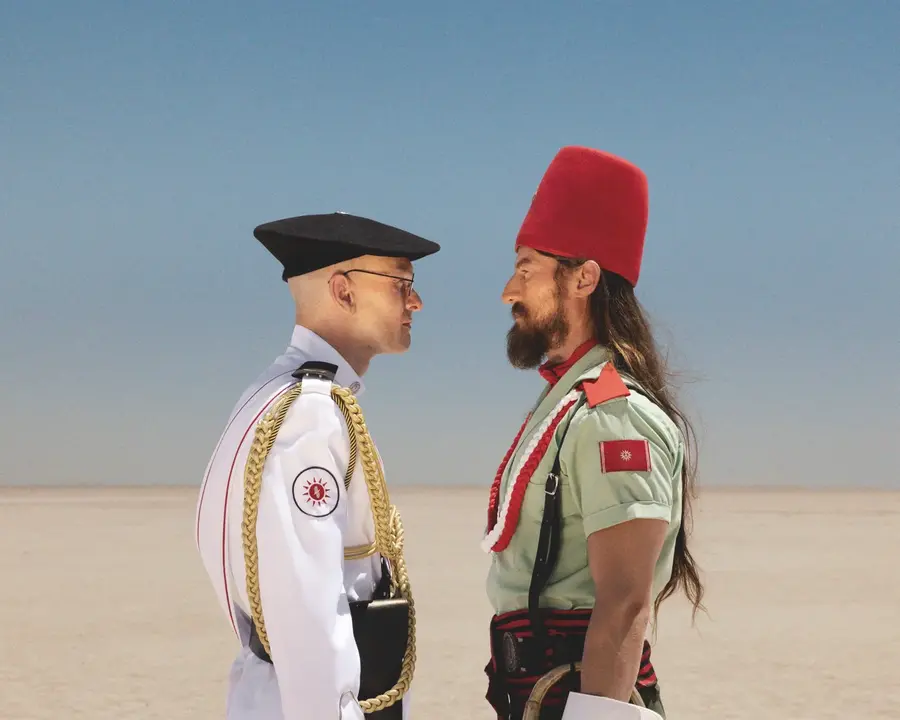
Two soldiers are stationed at a fence that marks the border of warring countries. They have sworn to serve their respective governments unflinchingly, without question. But the land on either side of the border is barren desert as far as the eye can see. And, after a while, they can’t seem to remember whose side is whose.
This is the general gist of Straight Circle, the debut feature from director Oscar Hudson, which was recently nominated for five BIFA awards. To try and describe the plot any further than that would be doing a disservice to the film – it has to be seen to be understood. (And even then, it might not be wholly understood).
Straight Circle opens with an absolutely stunning use of split screen, showing the (seemingly different yet entirely similar) absurd and ritualistic border opening ceremonies of the two nations. The screens then merge as we follow our soldiers, Private Warne and Private Arthur, who must share a house while carrying out their duties at this desolate border outpost.
The pair start as sworn enemies, polar opposites, but over the course of the film they must learn to cohabitate and cooperate. With the relentless passing of time, it becomes clear that their governments have abandoned them, and in the ensuing madness out in the heat of the desert they forget their duties, their countries, even their own names, and all differences are set aside.
Read More Reviews
This shedding of identities is not just symbolic; the pair even start to merge into one another and become impossible to differentiate by the end of the film. It’s partly due to astonishing costuming and prosthetics work which you don’t even notice until it’s gone, and partly to the incredibly committed performances from twin actors Elliott and Luke Tittensor (of House of the Dragon fame).
The alarming descent into madness is brought about by the stunning, hallucinatory cinematography from Christopher Ripley, which reveals a landscape that plays tricks on characters and audience alike. A drum pounds relentlessly in the background, and parts of the film almost spill over into grotesque, body horror territory.
The middle section of the film had the tendency to feel a little bloated, with the constant, oftentimes violent antics of the two soldiers getting a little tiresome after a while. Strange things occur involving an Old English-speaking goat farmer, overbearing military fathers, electric fans and flavoured lube. It’s a lot of symbolism, often confusing and not always effective, but by the film’s ending you are left with plenty of food for thought.
The backgrounds and histories of the two opposing countries aren’t really explained, but that’s the point. This absurd border protection ritual could stand in for any conflict zone in the world, although a modern audience would most likely draw comparisons to North and South Korea, with both sides speaking the same language. Either way, it’s a scathing indictment of conflict that serves to highlight just how ridiculous the notion of borders is.
“We’re guarding dust for politicians,” Warne tells Arthur at one point (or does Arthur tell Warne?). And it’s true – Hudson’s film really underlines the absurdity of war, of blind service to a power that doesn’t really care about you as an individual. The merging of the two men symbolises that we’re all not that different when it really comes down to it, and the land around us will remain the same despite the fences we so often put up.
★★★★
In cinemas from January 15 / Luke Tittensor, Elliott Tittensor, Neil Maskell / Dir: Oscar Hudson / BBC Film / Not yet rated